TrainingUpdated Sep 2026
Free AI courses to get you started.
This page is for getting started with AI, whichever way you learn. Some courses build your basic understanding of what AI is and does. Others put you in front of a tool and have you build something by the end of the hour. All of them are free to take.

Every course, at a glance
One line on what each course does for you. Tap a name for the full card: how it is taught, what you build, and where it costs.
Start with the basics
- Elements of AI
The University of Helsinki’s introduction to what AI is and is not, with quizzes and no code.
- Learn Prompting
A reference library of prompting techniques and a seven-day course on where prompts break.
- AI Fluency: Framework & Foundations
Anthropic’s short course on working with AI well: what to hand over, how to ask, how to check the answer.
Courses where you build something
- AI Summer Adventure
Twenty-three short build-it-yourself stations, from everyday assistants to agents that run on their own.
- OpenAI Academy
OpenAI’s free home for learning ChatGPT at work: three short courses with certificates, plus live sessions and walkthroughs.
- AI Prompting for Everyone
Andrew Ng’s no-code course on asking AI for what you want, with browser exercises.
Courses about AI agents
- Agents and Workflows
OpenAI’s 90-minute course on handing an agent a piece of work: set the context, the output and the limits, then check the result.
- Building Effective Human-Agent Teams
Anthropic’s 45-minute course for team leads on moving from one person using AI to a team working with agents.
- AI Agents Course
The free course most people name first for agents: four units from what an agent is to one you build and enter on a leaderboard.
- AI Agents for Beginners
Microsoft’s open eighteen-lesson course on building agents in Python, with a video and runnable code for each lesson.
- 5-Day AI Agents Intensive
Google’s five-day agents course, now self-paced: a short paper, a podcast and two hands-on labs a day.
- Agentic AI
Andrew Ng’s course on the four patterns behind every agent, built from scratch in Python before any framework.
Built for your department
- AI for Finance and Accounting
Twelve lessons that put AI to work on statements, board reports and forecasts.
- Free AI HR Course
A one-hour sprint that leaves you with a job-ad prompt, a screening workflow and a prompt library.
- AI for Legal Professionals
Contract triage, research memos and the rules on confidentiality, built for lawyers.
- AI for Marketing
HubSpot’s six lessons on taking one brief through a campaign and reading the results.
For people who code
- AI for Beginners
Microsoft’s twelve-week curriculum on how neural networks work, in Python notebooks.
- Practical Deep Learning for Coders
fast.ai’s hands-on course for people who code: train and deploy real models from lesson one.
Start with the basics
What AI is, what it does well, and how to ask it for things. No code, and nothing to install. Take one of these if you want to understand the tool before you lean on it.
- FreeBeginner
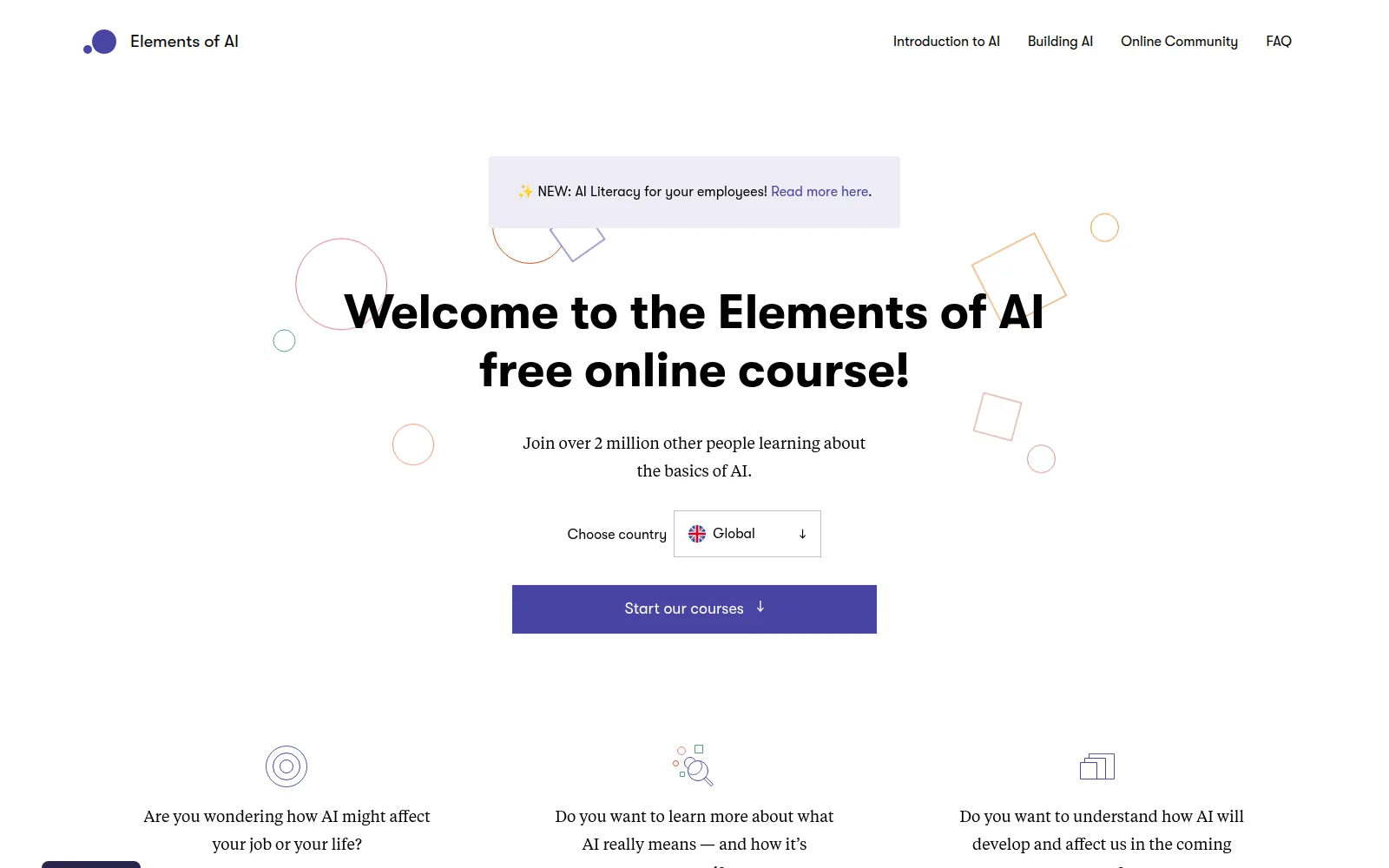
Elements of AI
University of Helsinki and MinnaLearn
Interactive quizzes and logic problems — no maths, no code, no videos. Helsinki's own count: two million students. It predates chatbots, so it teaches the foundations rather than ChatGPT.
What you build
- What the technology is actually doingHow a prediction gets made, and where machine learning differs from ordinary software that follows rules.
- Judgement about its limitsBias in training data, and the failures that are built into the method rather than fixable by a better vendor.
“Conceptually rigorous without being technical” Hashmeta review · May 2026
- Free to startBeginner to intermediate
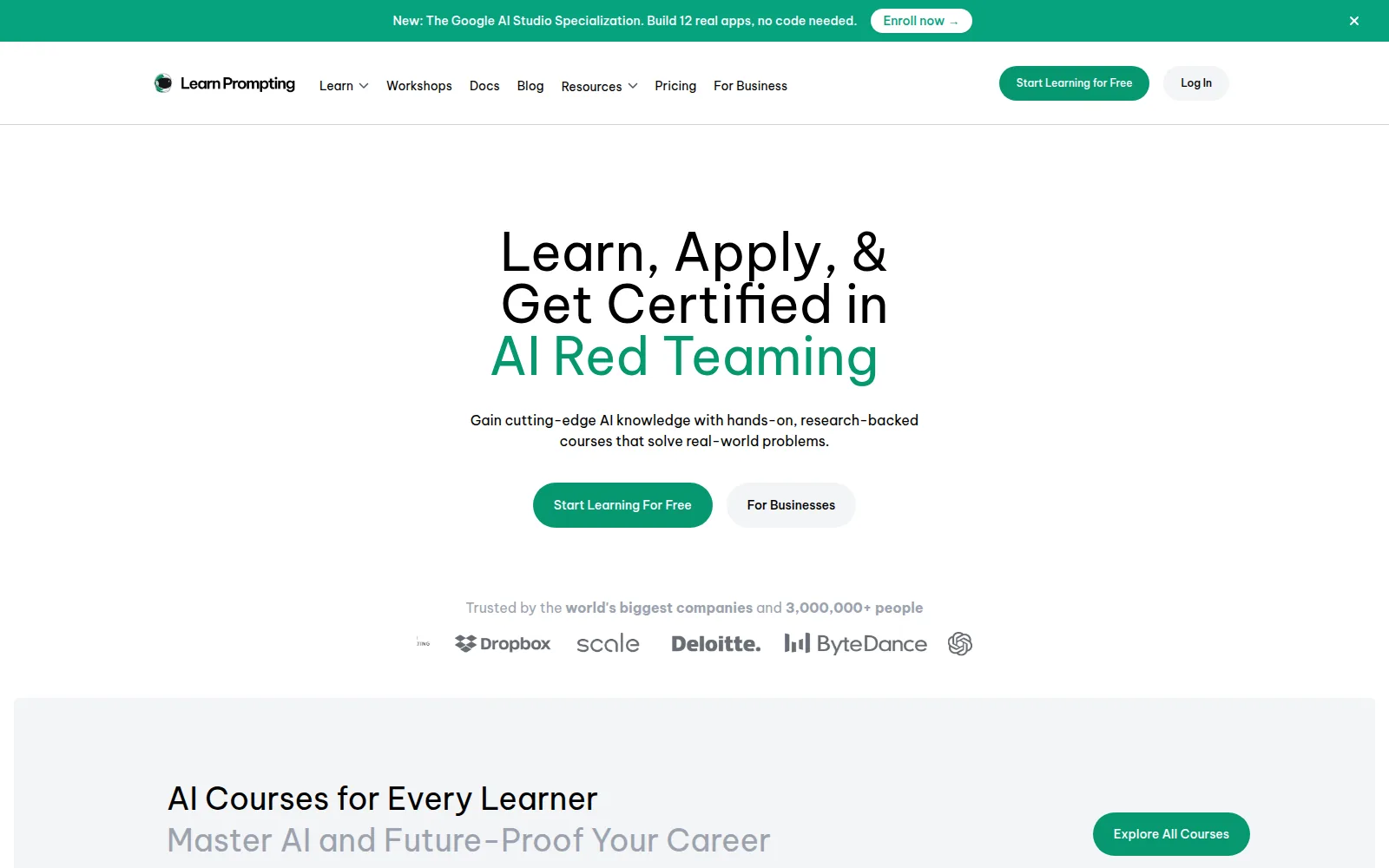
Learn Prompting
Learn Prompting
A reference library of prompting techniques, plus a seven-day course on where prompts break. It was written before ChatGPT existed; its own count since is three million readers.
What you build
- A method you can reuseThe named techniques, organised, so you can look one up rather than remember it.
- Knowing how prompts failThe security material on prompt injection is unusual and worth the time if anything you build faces outward.
“one of the largest online resources for learning prompting” Louis Bouchard · Apr 2023
Where it costsThe reference docs and the seven-day course are free. The certification tracks are paid.
- FreeBeginnerAbout 4 hours
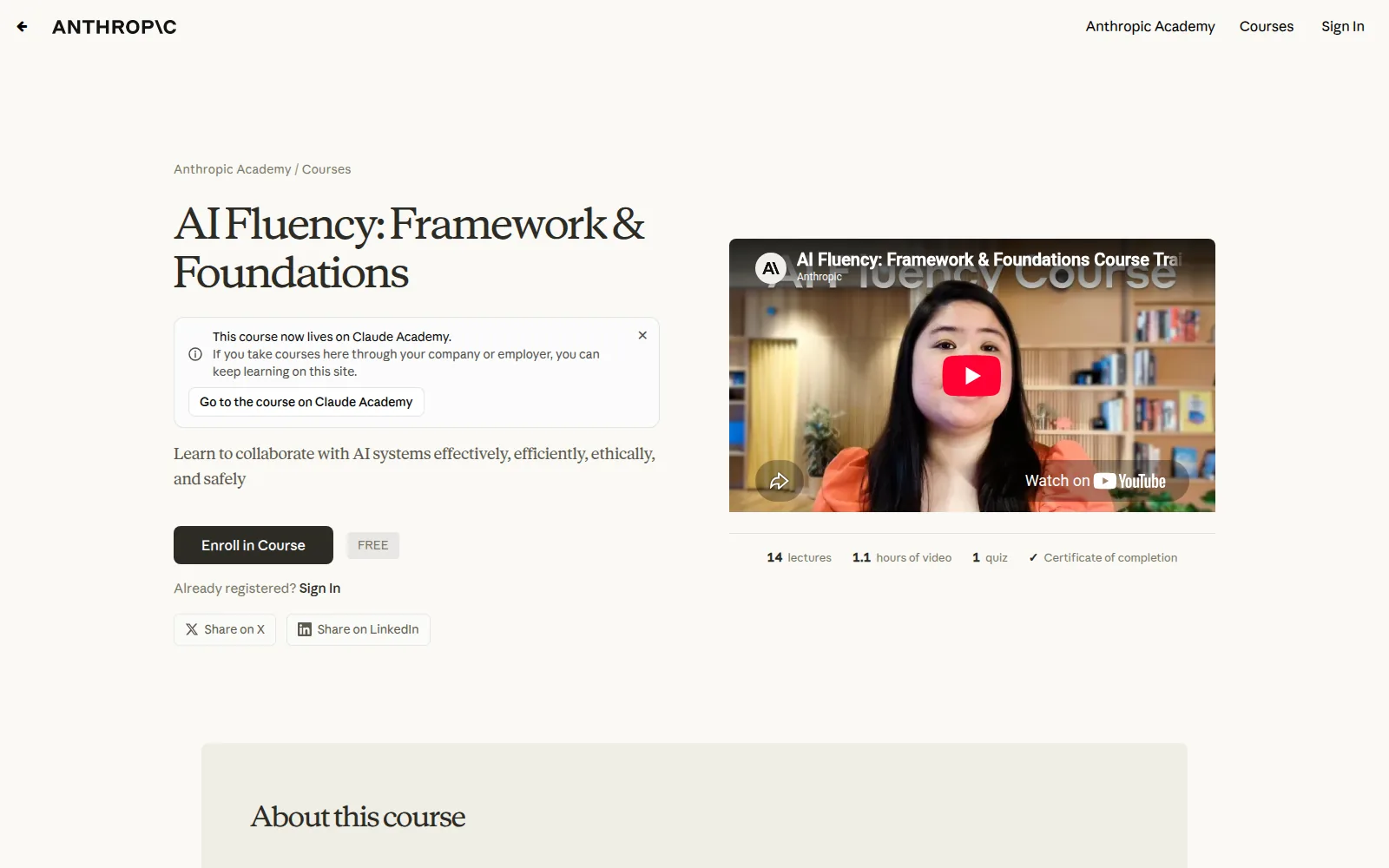
AI Fluency: Framework & Foundations
Anthropic, with Rick Dakan (Ringling College) and Joseph Feller (University College Cork)
Fourteen short video lessons and a quiz around one framework with four parts: delegation, description, discernment and diligence. About four hours, no code, a free Claude Academy login, and a certificate at the end.
What you build
- A rule for what to hand to AIDeciding which parts of a task the tool should do and which stay with you, before you open it.
- Requests that get useful answersDescribing the job, the audience and the format so the first draft is close.
- A habit of checkingReading an answer for what is wrong or missing, and being open about where AI was used.
“gives more context than most paid introductions” AI Weekly, the best free AI courses of 2026
Courses where you build something
Start here if you learn by doing. Each one leaves you with something built in a tool you already have, often within the hour.
- FreeBeginner to intermediate
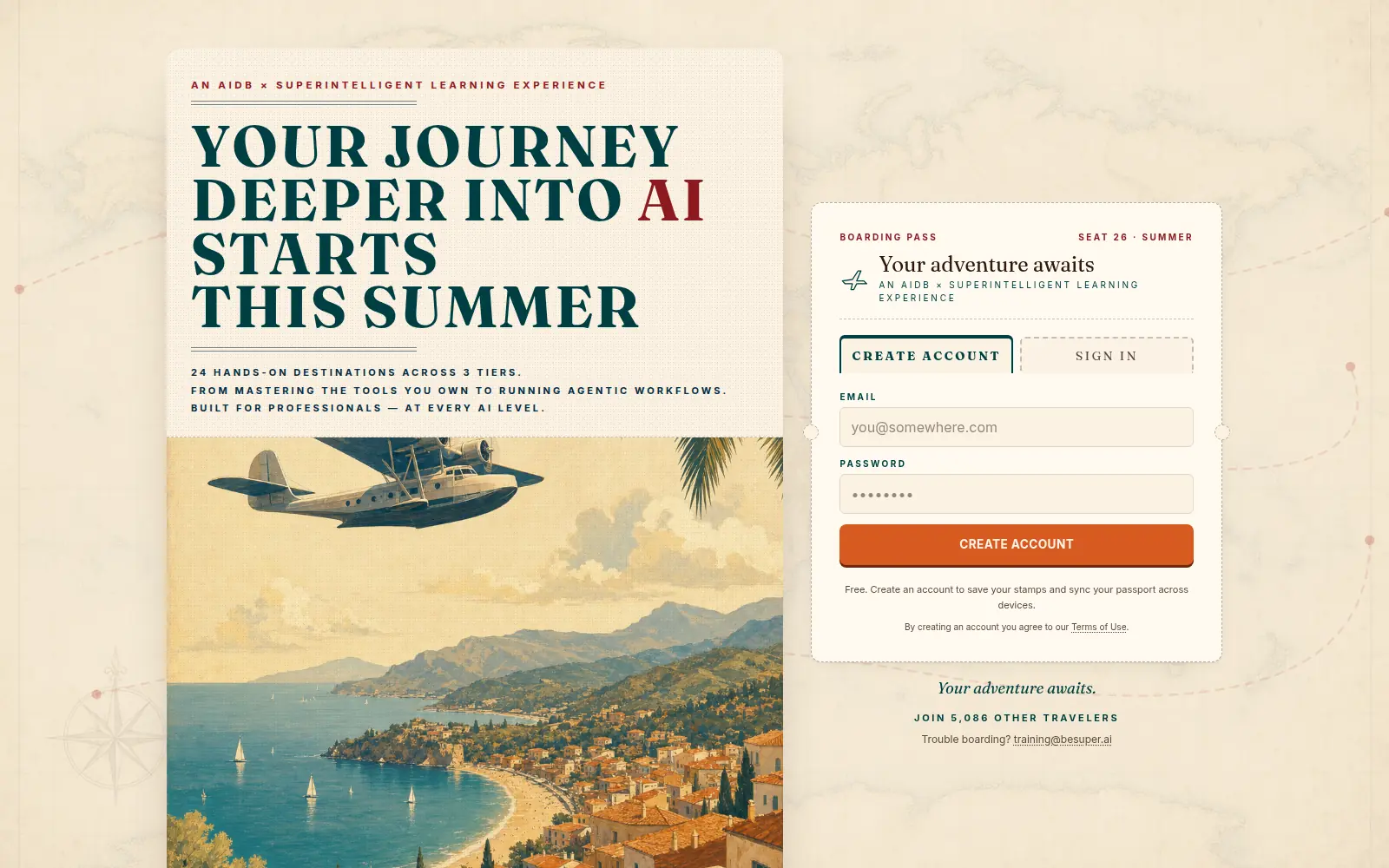
AI Summer Adventure
Nufar Gaspar, with The AI Daily Brief and Superintelligent
Twenty-three hands-on stations in three tiers, at your own pace — from the tools you already own to workflows that run on their own. Free with an account.
What you build
- Everyday productivity assistantsTier one works on the daily grind — turning messy notes and transcripts into something you would actually send.
- Custom knowledge assistantsTier two builds assistants that answer from documents you supply, rather than from whatever the model happens to know.
- Autonomous agents and multi-tool workflowsTier three chains steps together so a task runs without you sitting over it.
- FreeBeginner to intermediate60 to 90 minutes per course
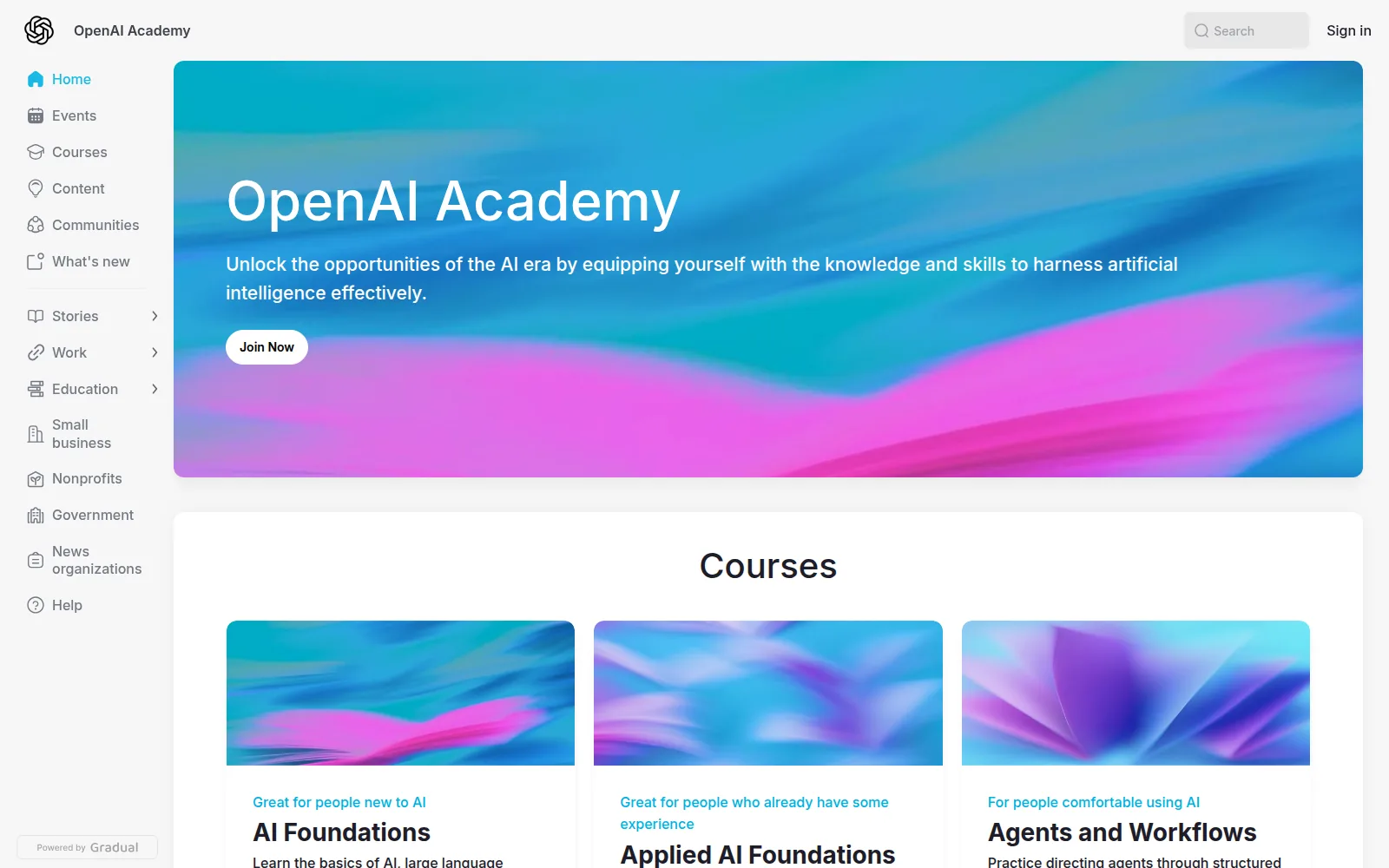
OpenAI Academy
OpenAI
Three self-paced courses of 60 to 90 minutes each (AI Foundations, Applied AI Foundations, Agents and Workflows) with progress tracking and a completion certificate through a free ChatGPT login, plus live sessions and a library of short walkthroughs.
What you build
- One everyday task done betterThe first course takes a task you already do in ChatGPT and makes the output something a process can rely on.
- A repeatable workflow planThe second course turns a routine job into steps an assistant handles in sequence, written down so a colleague could run it.
- An agent-assisted workflowThe third course hands a bounded piece of work to an agent and keeps the review with you; it is listed separately under AI agents below.
“practical and hands-on, and most importantly, there are no ads or paywall” Fabio Dantas, Class Central · Dec 2025
- Free to startBeginnerAbout 7 hours
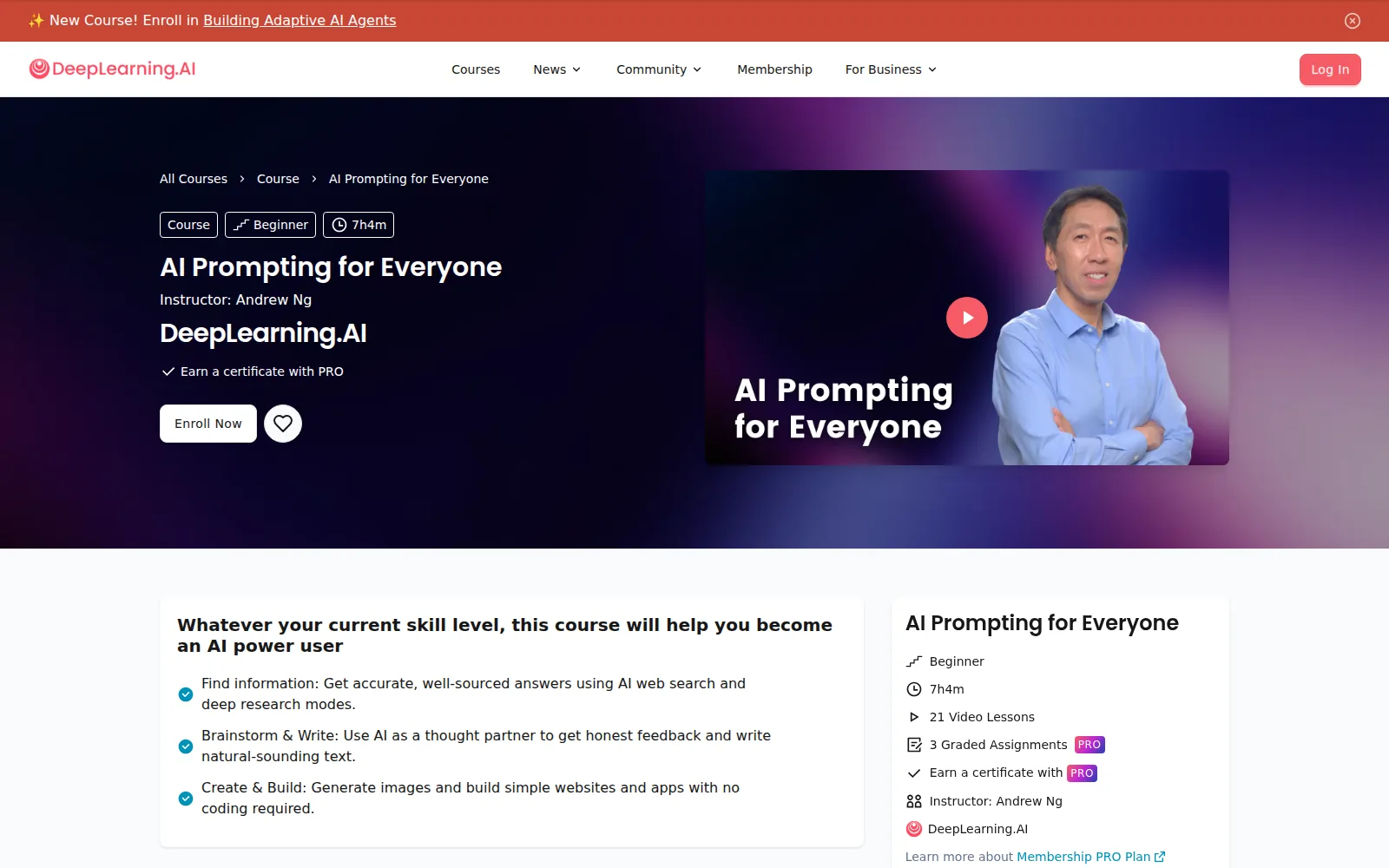
AI Prompting for Everyone
DeepLearning.AI, taught by Andrew Ng
Twenty-one video lessons with guided browser exercises. No coding at any point — built, in its own words, for anyone who uses ChatGPT, Claude or Gemini at work.
What you build
- Dense reports into executive summariesWorking a long document down to the version a board would read, and knowing what got lost.
- The model as a criticInstructing it to argue against you as a sceptical director or a strict editor, which is where it earns its keep.
- Thinking through an ambiguous problemUsing it on scenarios that have no clean answer, rather than on tasks you already know how to do.
Where it costsThe videos are free. Graded assignments and the certificate need a Pro membership at $25 a month, billed annually.
Courses about AI agents
An agent is software you hand a whole job to. These courses show how agents work and walk you through building one. Most expect a little Python; if you do not code, take the third tier of AI Summer Adventure above first. Read our agents page if the word is new to you. What an AI agent is, in plain words.
- FreeBeginner to intermediateAbout 90 minutes
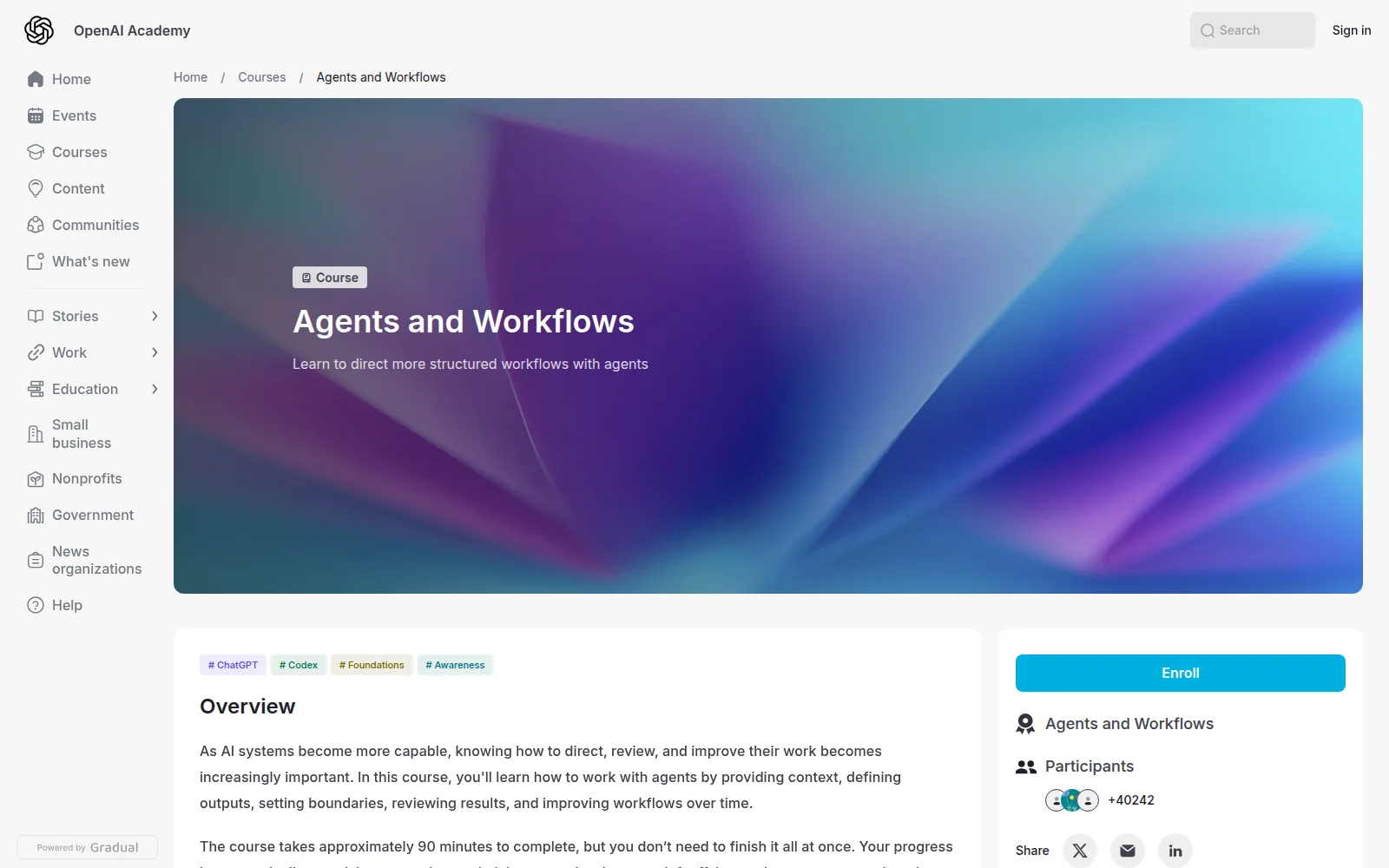
Agents and Workflows
OpenAI
Self-paced, about 90 minutes, video and short exercises inside ChatGPT, with progress saved so you can stop and return. Needs a free ChatGPT login and gives a completion certificate. The third of OpenAI Academy’s three courses; start here if you already use ChatGPT every day.
What you build
- A brief an agent can act onGiving the context, the output you want and the boundaries before the agent starts, so the result needs one review rather than five.
- A review step you keepWhere a person must still look, which the course treats as part of the workflow rather than an afterthought.
- A workflow you run againTurning the one task that worked into a pattern you can reuse and hand to a colleague.
“useful because it connects AI literacy to repeatable work and human oversight” Curtis Pyke, Kingy AI · Jun 2026
- FreeBeginner45 minutes
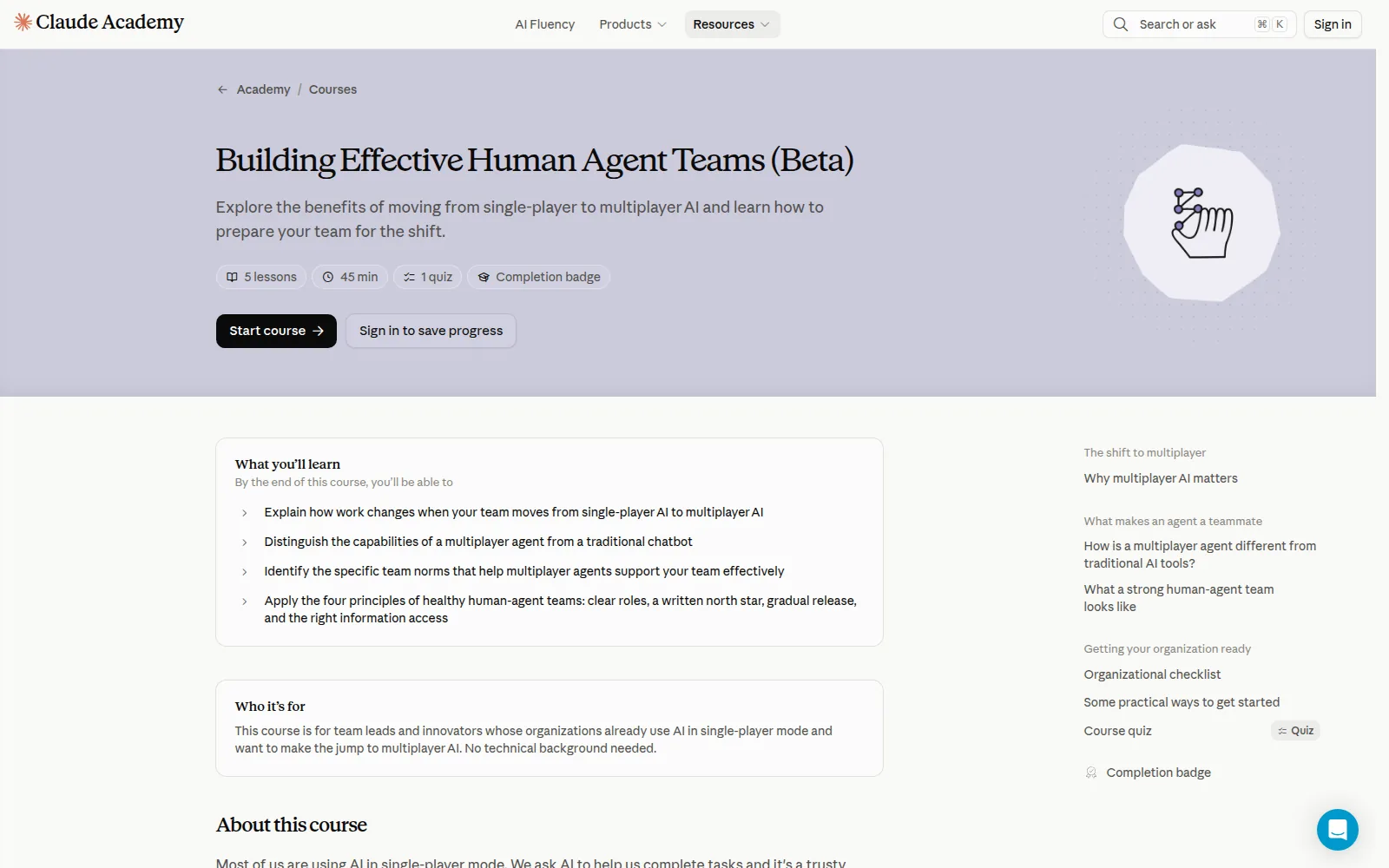
Building Effective Human-Agent Teams
Anthropic
Five short lessons and a quiz, self-paced, 45 minutes, no code. A free Claude Academy login saves your progress and gives a completion badge. Anthropic marks it beta, so expect it to change.
What you build
- The difference between an agent and a chatbotIn words you can repeat to your team: what an agent does on its own, and what it still hands back to a person.
- Four working rules for a mixed teamClear roles, a written north star, a gradual release of responsibility, and the right access to information.
- A checklist for your organisationWhat to settle before agents join the work: the norms, who owns what, and where a person signs off.
- FreeIntermediateAbout 15 to 20 hours
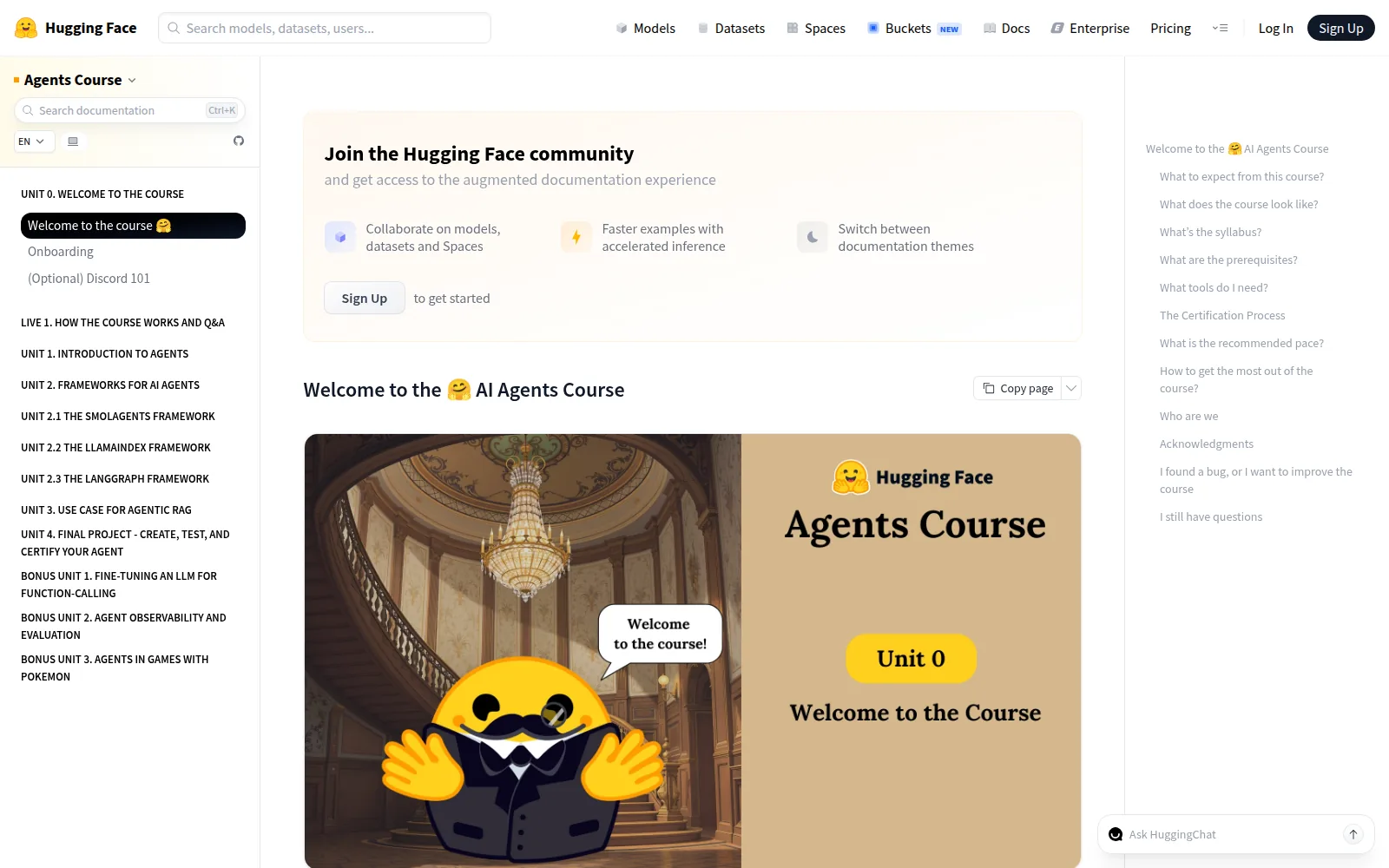
AI Agents Course
Hugging Face
Four units of about a week each, three to four hours a week, self-paced with no deadline. Reading, short videos and notebooks that run in the browser. It expects basic Python and a free Hugging Face account.
What you build
- A clear picture of how an agent thinksThe loop of thought, action and observation that every agent runs, and what a tool is to it.
- A first agent in three toolkitsThe same simple agent built with smolagents, LlamaIndex and LangGraph, so you can see what a framework adds.
- An agent scored against a benchmarkThe final assignment: an agent you build, test and submit to a public leaderboard, with a free certificate.
- FreeIntermediate to advanced
AI Agents for Beginners
Microsoft
Eighteen written lessons, each with a short video and a Python notebook, plus a Discord for questions. Free and open source. You need Python, and the code samples expect a Microsoft Foundry account or an API key for another model provider.
What you build
- A working agent with tools and memoryAn agent that calls tools, keeps track of what it has done, and looks things up in your own documents.
- Agents that work togetherSplitting a job across several agents and the patterns for planning and checking their work.
- Something you could run for realThe later lessons cover getting an agent into production, keeping it secure, and running one on your own machine.
- FreeIntermediateFive days, at your own pace
5-Day AI Agents Intensive
Google and Kaggle
Five days of material you can take at your own pace: a technical whitepaper, a companion podcast and two browser notebooks a day, built on Gemini and Google’s Agent Development Kit. Free with a Kaggle account. The labs are in Python.
What you build
- Your first agent, and your first team of themDay one builds an agent that can search the web for an up-to-date answer, then a small system of several agents.
- Agents that rememberSessions and long-term memory, and how to manage what an agent keeps in view.
- A way to tell whether it worksEvaluation, and what it takes to move an agent from a prototype to something people rely on.
- Free to startIntermediate to advanced
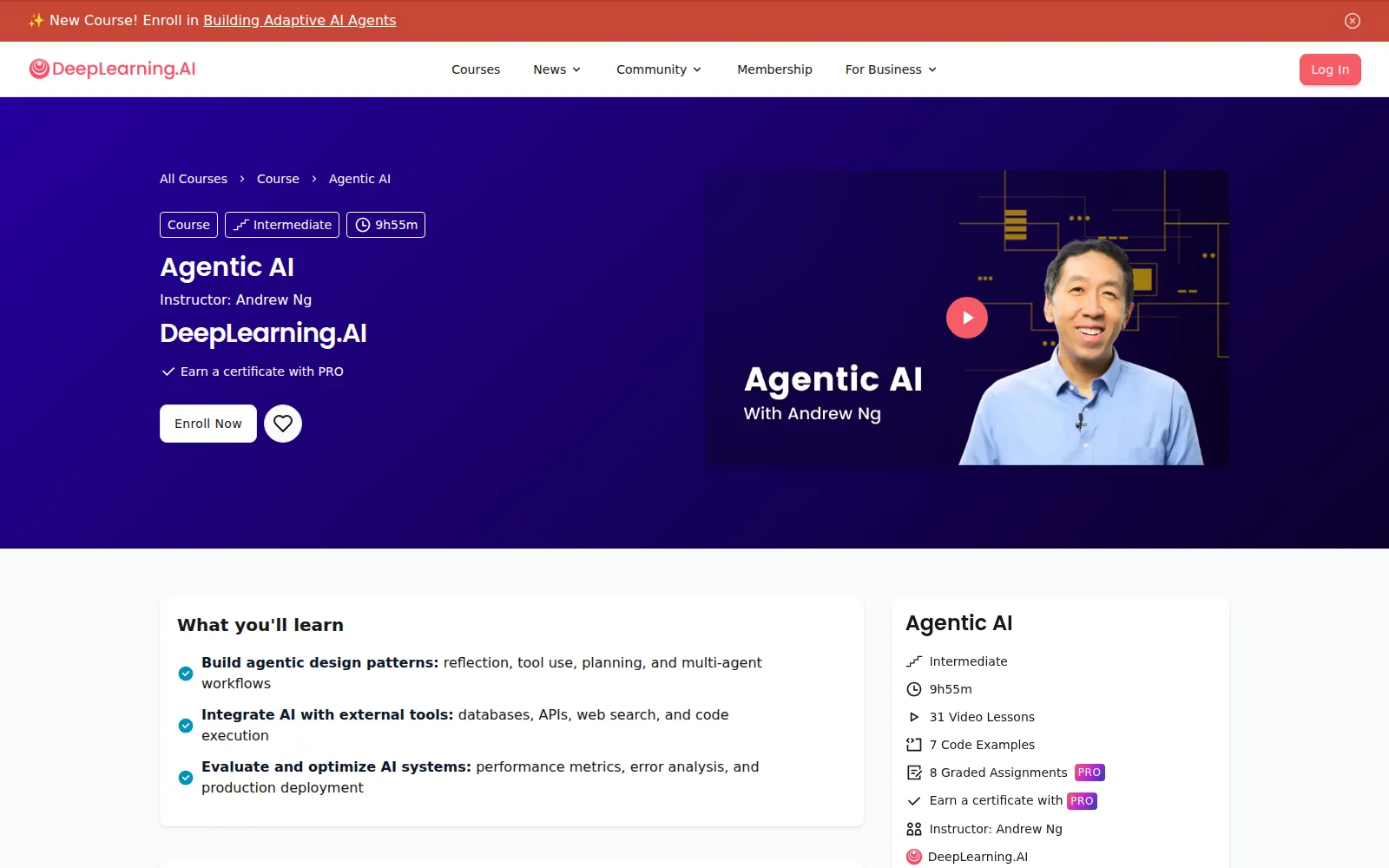
Agentic AI
DeepLearning.AI, taught by Andrew Ng
Video lessons with coding exercises. Four patterns, reflection, tool use, planning and several agents working together, each built by hand before a framework is introduced. Expects intermediate Python.
What you build
- An agent that checks its own workThe reflection pattern: a first draft, a critique, and a better second draft, all by the same system.
- An agent that uses tools and plansGiving a model functions to call, then letting it break a task into steps and work through them.
- Several agents on one jobSplitting a task between agents with different roles, and the judgement of when that helps.
Where it costsThe videos are free. Graded assignments and the certificate need a Pro membership at $25 a month, billed annually.
Built for your department
Role-specific courses that work on your own material: your contracts, your close, your campaign brief.
- FreeBeginner to intermediate
AI for Finance and Accounting
FreeAcademy.ai
Twelve applied lessons worked directly against financial statements, reports and spreadsheets. No signup needed to start; the certificate takes a final exam.
What you build
- Statement analysis you can checkPulling variance drivers and ratios out of a P&L or cash flow statement, with the working visible.
- A repeatable board-reporting templateTurning a monthly close into narrative commentary, the same way every month.
- Pressure-testing a forecastRunning scenarios against your own assumptions and flagging expense entries that look wrong.
“If you can use a spreadsheet and write an email, you can use these workflows” FreeAcademy.ai, from the course page
- FreeBeginner60 minutes
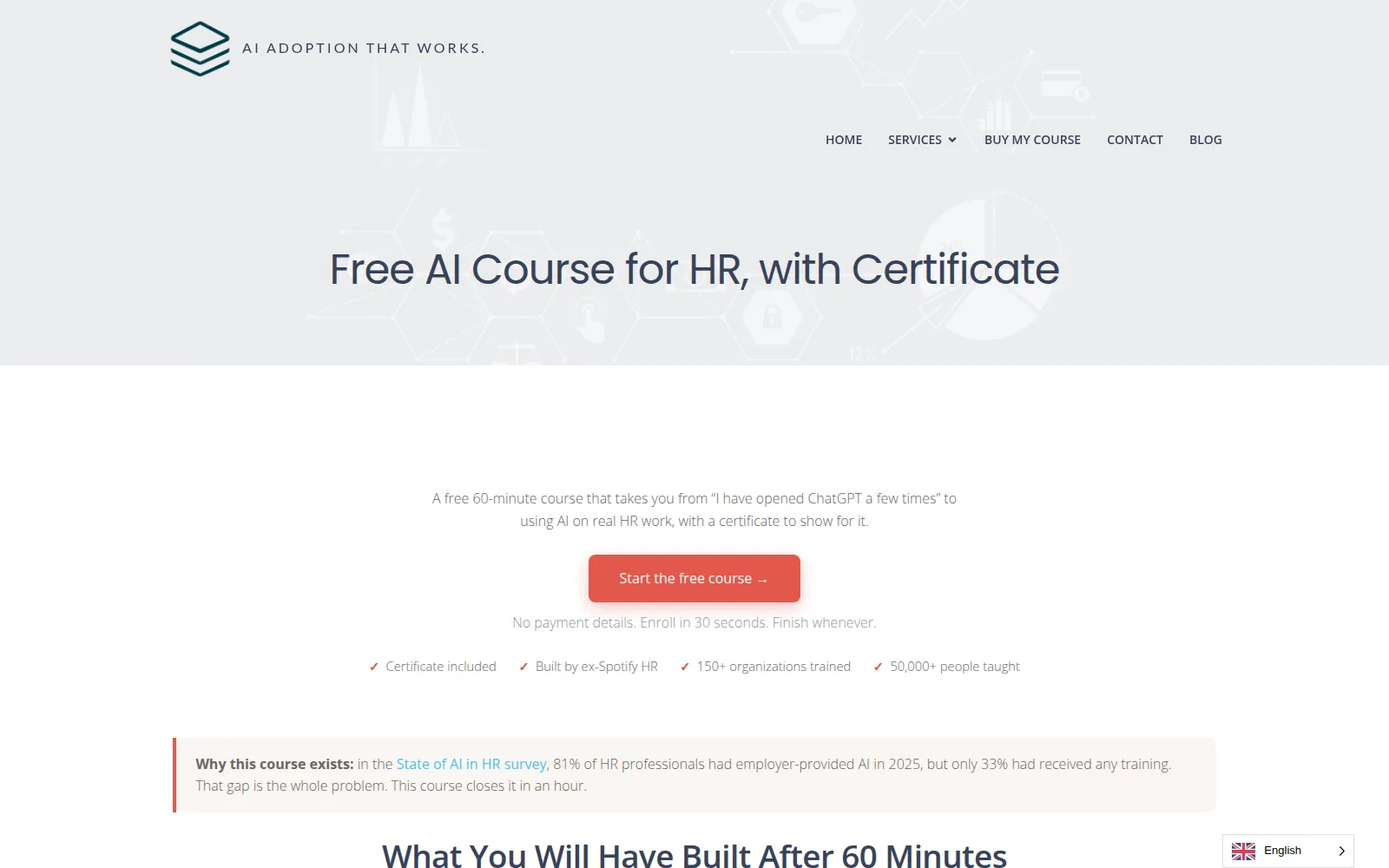
Free AI HR Course
Johannes Sundlo
A sixty-minute sprint. You leave with four things built in your own tools, and the certificate is free — no payment details, just an email.
What you build
- A job-ad prompt in your voiceA role description generated the way your company actually writes, plus scoring criteria to judge candidates consistently.
- A screening summary workflowA repeatable way to summarise applications against the role before a human decides.
- Your first prompt libraryThe prompts you built, organised for reuse, and a one-page guardrail checklist for using AI on people decisions.
“This is a doing course, not a watching course” Johannes Sundlo, from the course page
- FreeBeginner to intermediate
AI for Legal Professionals
FreeAcademy.ai
Text-analysis labs on risk, compliance and disclosure duties, grounded in real legal workflows.
What you build
- Contract triageReading an NDA or vendor agreement down to a table of non-standard terms, auto-renewals and liability caps.
- Research and summarisingTurning regulatory filings into a briefing memo a business colleague will actually read.
- Confidentiality and disclosureFull modules on privilege, client confidentiality and when you have to say AI was involved.
- FreeBeginner to intermediate2 hours 49 minutes
AI for Marketing
HubSpot Academy
Six lessons, fifteen videos and four quizzes, from brief through to performance analysis. Needs a free HubSpot account.
What you build
- One brief into a full campaignTaking a single brief out to social, email and long-form without losing the voice.
- Testing a message before launchTrying headlines and value propositions against a described audience while it is still cheap to change them.
- Reading the resultsTurning campaign performance data into what to change next week.
For people who code
How the technology works underneath, taught in Python. Skip these unless you write code, or want to.
- FreeIntermediate to advancedTwelve weeks
AI for Beginners
Microsoft
Microsoft's own pitch: twelve weeks, twenty-four lessons, with quizzes and runnable notebooks. For people comfortable in Python — it teaches how neural networks work under the hood.
What you build
- Working models, from scratchBuilding small networks that classify images and read handwriting, so the mechanism stops being a metaphor.
- How language models work underneathText classification and the transformer architecture that everything else on this page is built on.
- Bias you can measureEvaluating algorithmic bias in vision models rather than discussing it in the abstract.
“Free, MIT-licensed, no account or certificate paywall” explainx.ai review · Aug 2026
- FreeAdvanced
Practical Deep Learning for Coders
fast.ai
Top-down coding projects in Python. fast.ai's stated prerequisite: knowing how to code, with a year of experience enough.
What you build
- A trained model in lesson oneFine-tuning a real vision model on your own images before any theory is explained.
- Models tuned to your own textTaking an open-weight model and adapting it to a specialised body of documents.
- Something deployedPackaging a trained model into an application, which is where most courses stop and this one keeps going.
“Your courses completely changed my perspective on what was possible for me” Hacker News · Jul 2022